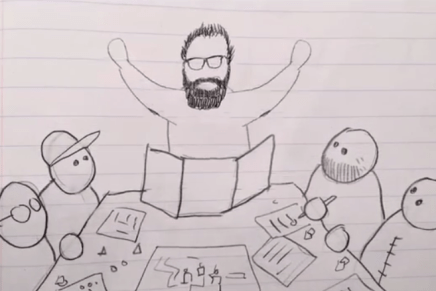
Spot Check 15: Rules Complexity and Intimidation
How does bringing new players into a group of gamers influence their group identity? How does the complexity of a game shape a new player’s experience? Find out in this installment of Spot Check!

How does bringing new players into a group of gamers influence their group identity? How does the complexity of a game shape a new player’s experience? Find out in this installment of Spot Check!
In this installment of Spot Check Flashbacks we’re going back to the beginning. This is the first episode of the series, recorded when my Kickstarter was in full swing. If you want to skip past the section about the Kickstarter, set a course for 1:50, where you’ll here me talk about the ways that we narrativize our everyday lives and how stories help us with that.
As promised, here is the most recent episode of Spot Check, the video series documenting my dissertation research into tabletop gaming. New episodes will be posted every Thursday. If you’d like to start at the beginning, you can go directly to the Youtube channel, or catch the archived episodes as they go up every Saturday. In this episode I talk about insider anthropology and gamers’ enthusiasm for bringing new people into the hobby.

I admit without shame that I often cheat when I play video games: I have skipped missions on Starcraft when loosing repeatedly became too frustrating. I don’t think I have ever played Quake on anything else than Godmode. Cheating allows me to manipulate the game experience, exploit the aspects of it I enjoy the most and free myself from some of the more demanding aspects when I don’t enjoy them.
However, because I cheat to enjoy easy and fun gaming, I would not go out of my way to cheat. Additionally, I would not cheat if the game-play is enjoyable and rewarding. And I have found that cheating can rob you of some of the best rewards games have to offer. When I got stuck on the final stage of Portal 2, I looked up a walk-through and ended up discovering the final step without wanting to: to this day, I wonder what kind of amazement I would have felt had I been able to figure it out for myself.

This article is a contribution by Jennifer Lewis.
We humans are a complicated lot. On one hand, we like to probe mysteries and strive to solve puzzles but on the other, we do like to be able to put things into neatly formed compartments so that we can classify them. Once we have a name and a label, we can file them away in the filing cabinet of our brain and, ostensibly, move on to the next idea.
 The Geek Anthropologist