All posts by Marie-Pierre Renaud

Unknown's avatar

About Marie-Pierre Renaud

I am an anthropologist living in Quebec city, Canada. I specialize in native studies and anthropology of health. I founded The Geek Anthropologist blog. I am working on my PhD. I like to knit while watching Star Trek. Reach out to me for collaborations! https://mariepierrerenaud.co/

University for beginners

University for beginners

I have spent the last 6 years of my life in university. If I move on to doing a PhD, as I plan, I will probably study for another 4 to 5 years. And if my career plans are successful, I will spend the rest of my life working in a university. So you can probably guess that I love anthropology and that I feel very comfortable in an academic setting. Of course, having been in university for so long, I have had time to realize what I did well and what I could have done better as a student. I wish to share this knowledge with you. Hopefully, you will put it to good use either by taking my advice of by being inspired by it to develop your own ways of working and planning your efforts. The most important thing, I believe, is not so much to stick to one specific way of studying and working, but that you plan your system, respect it, and thrive to improve it.

This first post is especially aimed at bachelor students but can be interesting for master’s and PhD students as well. I’m sorry I didn’t post it earlier this semester, but it’s never too late to improve your methods!

From Science-Fiction to Anthropology: there and back again

From Science-Fiction to Anthropology: there and back again

My first contact with science-fiction was through Star Trek the Next Generation. I can’t say for certain at what age I started watching it, but I believe it was in 1992 that I asked for the series figurines for Christmas. I was 6 years old. As a kid, I did not speak English. Being a francophone, I kept asking my father to translate the episodes, to his great despair. He would do so during commercial breaks after trying to listen as best he could to the show. Many of my early memories of Star Trek TNG are unclear, probably because I din’t get the story.

How geeky are you: the geek code and the geek test

How geeky are you: the geek code and the geek test

I discussed in my previous post about geeks and nerds that I would rely on people’s self-identification as one or the other to consider them as such and include them, their hobby or interest in the study of geek culture on this blog. I will continue, however, to pay attention to the many definitions people attribute to these terms. It is fascinating to see how people create mechanisms to determine empirically determine one’s geekiness or nerdiness. Two of these mechanisms were part of my recommendations for week-end fun last Friday: the Geek Code and the Geek Test. Did you check them out? I did, and here is a summary of my experience building my very own geek code and taking the test.

Geeks and Nerds: a terminological debate

Geeks and Nerds: a terminological debate

As I mentioned in my first post, I consider geek culture to be that of “comic book fans, sci-fi and fantasy fans, science and robotics addicts, gamers, dungeons and dragons players and the more recent steam punk enthusiasts” and, generally speaking, what you can find at a Comiccon. I also specified, however, that this definition was my own and could by no means be considered absolute. There are many reasons for that to be the case.

Geeks and nerds: some representations

Geeks and nerds: some representations

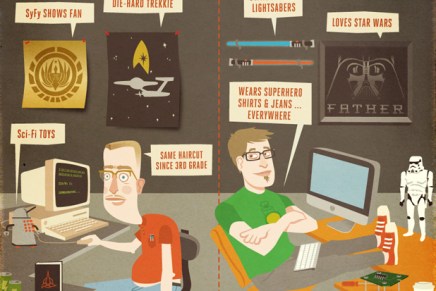
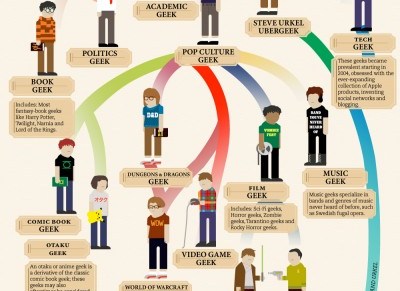
As I mentioned in my first post, it is essential to define words such as “geek“, “geek culture” or “nerd” before I proceed in this enterprise of the anthropological study of geek culture and online communities. So in the following few weeks I will be posting research material I use to build clearer definitions of these concepts as well as the definitions themselves. The first concepts we will be exploring is those of ”geek’, and ”nerds” as they are central to the project that underlines this blog. In addition, there is an ongoing debate on the deep meaning of these words and, more importantly, on whether there is actually any difference between the two. Some of the most interesting images I found so far on the topic are on this pinterest board. Enjoy!