
Beam Me Up, Sociology!
The first episode of Star Trek I remember watching was the Next Generation episode “The Best of Both Worlds, Part…

The first episode of Star Trek I remember watching was the Next Generation episode “The Best of Both Worlds, Part…

Last week, Paolo Jose Cruz wrote a post in answer to What I Wish I Could Unlearn From Star Trek TNG: The Prime Directive or conserving cultures like a lab sample, which I published as part of a three-part series. I figured I might as well take the time to write a decent answer, so I made a post out of it. Warning: this post contains mentions of anthropological work.
The TV shows we watch contribute to the shaping of our ideas and notions about the world we live in. On one hand, they can reinforce what we think we know, and the things we don’t realize shape us and our social relations.
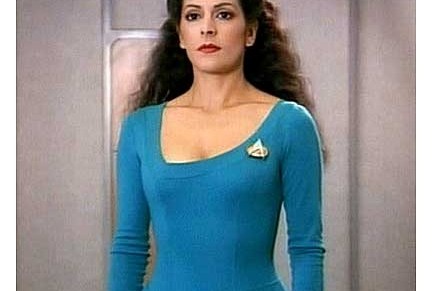
In the first post of this series of three, I briefly explored how TNG authors reinforced, most likely unknowingly and unwillingly, certain notions about gender. The representations they gave of many female characters seem to suggest that women are second to men in terms of potential, and that their role is to assist their male boss, husband or father in their endeavors.

At first glance, the Prime Directive looks like an astonishing and humble moral posture: humans admit that they don’t know everything. They should mind their own business instead of imposing their views on others. They should respect the laws, cultures and values of others. They should not interfere with aliens whose development is under a certain level and allow them to develop naturally.
Since my blog’s creation last September, I have written about my (anthropological) perceptions of science-fiction on a few occasions.
In From Science-Fiction to Anthropology: there and back again, I described in detail the curiosity Star Trek and other sci-fi franchises have sparked in me for otherness and extreme alterity. This, I believe, is one of various elements that led me study anthropology, which in turn, brought me to be much more critical of the themes science-fiction explores.
 The Geek Anthropologist